/filters:format(jpeg,png)/fit-in/300x300/guide_websites/122594/images/1777344574312logo.jpg)
/filters:format(jpeg,png)/fit-in/237x80/guide_websites/122594/images/1777344574312logo.jpg)
King Mackerel and Wahoo Catch in Fort Walton Beach
King Mackerel and Wahoo Fishing in Fort Walton Beach - What to Expect
%2F%2Fusers%2Fd4d883eb-1883-4138-9c4c-e9e73c12427e%2Fimages%2Fking-mackerel-wahoo-fishing-success-2819.jpg&w=1920&q=75)
Fishing Charter by Captain Eric Von Zapf in April
- Private charter fishing Destin, FL


Summary
Join Captain Eric Von Zapf on a Sunday in April for an exciting fishing charter in Fort Walton Beach. This offshore fishing charter targets King Mackerel and Wahoo, offering anglers the chance to battle hard-fighting pelagic species in the productive Gulf waters. Full Bend Charters specializes in inshore and offshore adventures.
Fishing Charter with Captain Eric Von Zapf - Rates & Booking
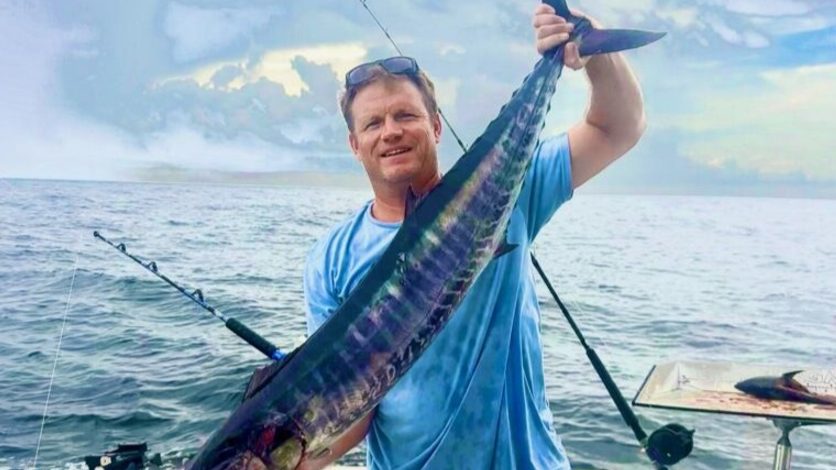
Captain Eric Von Zapf of Full Bend Charters operates fishing charters out of Fort Walton Beach on the Florida Panhandle. On this Sunday in April, anglers successfully targeted and landed multiple King Mackerel and Wahoo during an offshore fishing adventure. Whether you're seeking your first pelagic species or looking to add to your catch record, Captain Von Zapf brings local expertise and professional guidance to maximize your fishing experience.
Full Bend Charters provides everything needed for a productive day on the water. To book your charter and inquire about current rates, group size options, and specific targeting preferences, contact Full Bend Charters directly. Captain Von Zapf can customize trips based on your skill level and species preferences.
Highlights of This Offshore Fishing Experience
The success shown in this catch demonstrates what's possible when targeting Gulf pelagics. King Mackerel and Wahoo are aggressive predators that provide exciting, hard-fighting action. The proximity of Fort Walton Beach to deep Gulf waters makes it an ideal location for these species, with multiple anglers on this charter connecting with quality fish.
Fishing with experienced captains like Eric Von Zapf significantly increases your chances of locating productive grounds and understanding the behavior patterns of these species. The shared excitement of a successful group fishing day creates memorable experiences that go beyond the fish themselves.
Local Species Insights: King Mackerel and Wahoo
Fort Walton Beach sits in prime territory for pelagic species. King Mackerel are fast, aggressive hunters found in Gulf waters, typically cruising in search of baitfish. They respond well to live bait and trolling techniques, and their powerful runs make them prized game fish. Understanding their feeding patterns helps anglers present baits effectively and connect with these explosive fish.
Wahoo are similarly aggressive pelagics with razor-sharp teeth and lightning-quick strikes. These streamlined fish prefer live baitfish and cut offerings, and they're known for their sustained runs and aerial displays when hooked. Both species thrive in the offshore waters accessible from Fort Walton Beach, particularly during spring months when baitfish aggregations attract predators.
The Gulf ecosystem around Fort Walton Beach supports strong populations of both species due to consistent baitfish availability and ideal water temperatures. Successful anglers focus on structure, current lines, and depth zones where these pelagics concentrate. Captain Von Zapf's local knowledge helps identify these productive zones and timing that increase your success rate.
Offshore fishing in this region demands quality tackle, proper technique, and patience. King Mackerel and Wahoo respond to varied approaches including live-lining, trolling with artificial lures, and sight-casting opportunities. Each technique has specific applications depending on water conditions and fish behavior on any given day.
The transition seasons of spring bring increased activity from both species as they move through Gulf waters on seasonal migrations. Full Bend Charters capitalizes on these patterns to put anglers on productive bite windows and memorable catches.
Fishing in Fort Walton Beach: King Mackerel and Wahoo Fish
King Mackerel Overview
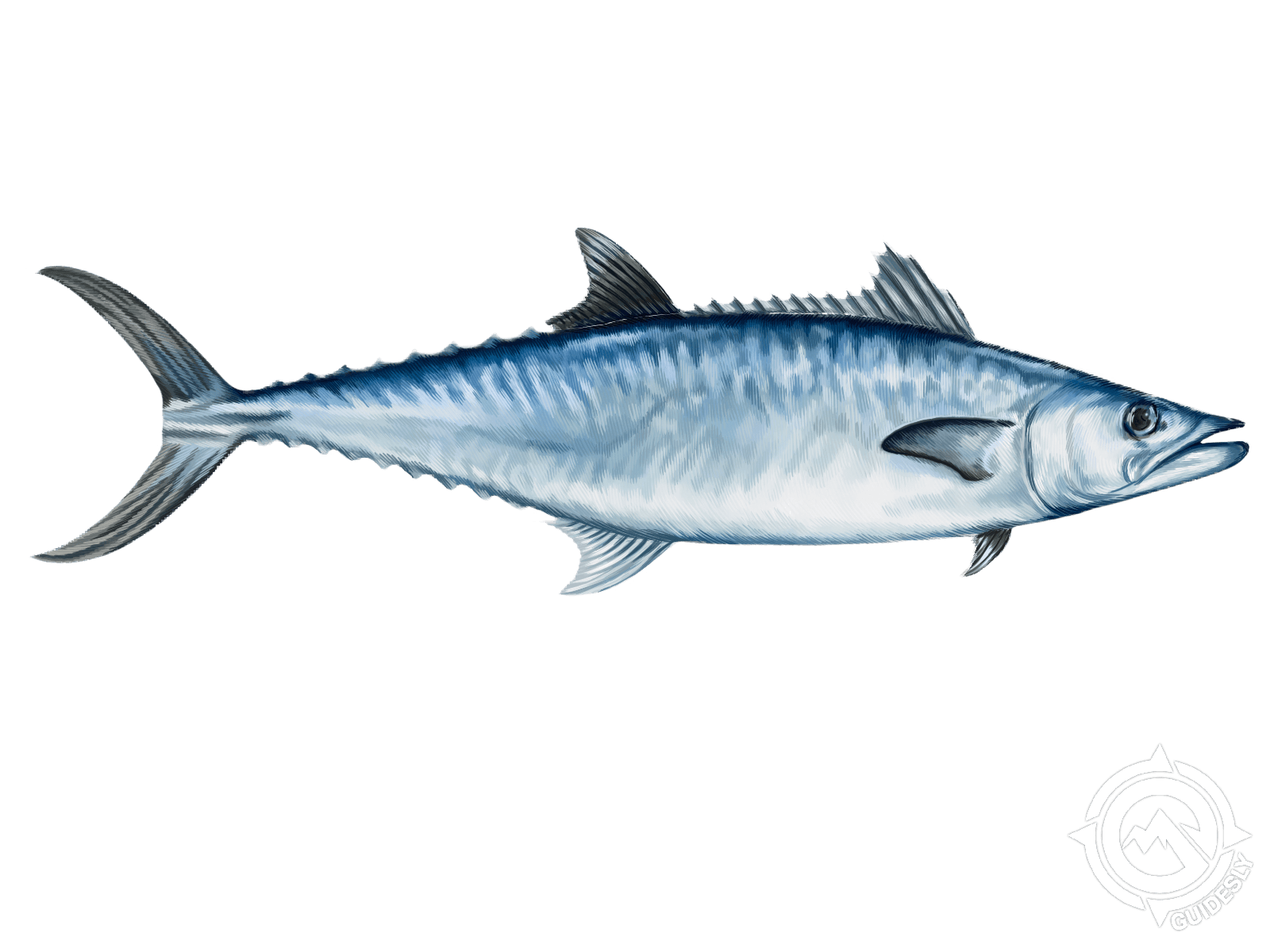
The King Mackerel (Scomberomorus cavalla) is a prized saltwater gamefish belonging to the family Scombridae and order Perciformes. Also known as Kingfish or Spanish Mackerel, this migratory powerhouse is famous among anglers for its lightning-fast runs and aggressive strikes. What makes the King Mackerel instantly recognizable are its small, loosely attached scales covering an olive-green back that contrasts beautifully with a silvery-white belly and shimmering, rosy iridescent sides. Younger specimens sometimes display brownish or yellowish spots on their flanks. Native to subtropical waters, King Mackerel are found throughout the Atlantic Coast and Gulf of Mexico, with particularly strong populations near North Carolina and Brazil. If you've ever chased a silver bullet through the water off the coast, chances are you've tangled with one of these magnificent fish.
King Mackerel Habitat and Distribution
King Mackerel are subtropical specialists that thrive in warm Atlantic and Gulf waters, ranging from the Gulf of Maine down through North Carolina, the entire Gulf of Mexico, and extending to Brazil—especially around Rio de Janeiro where they're incredibly abundant. These fish are also found in the Bay of Bengal and throughout the Indian Ocean and Arabian Sea. They prefer depths between 40 and 150 feet during normal conditions, though larger specimens often venture inshore to harbors and inlet waters as deep as 590 feet. Water temperature is crucial to their distribution; they're most active and concentrated in waters ranging from 68 to 84°F. Understanding these depth and temperature preferences is essential for anyone planning a King Mackerel fishing adventure along the Atlantic coast.
King Mackerel Size and Weight
King Mackerel are considered medium-sized fish, with a typical size range of 19 to 72 inches in length. Most caught specimens weigh between 10 and 20 pounds, though specimens commonly reach 30 pounds, and trophy-sized individuals have exceeded 90 pounds. An interesting biological detail: females significantly outweigh males at the same age. For example, a seven-year-old female King Mackerel might tip the scales at 22 pounds, while a male of identical age weighs only about 11 pounds. This sexual dimorphism in growth rates makes trophy hunting for larger specimens a realistic goal for dedicated anglers in coastal regions from North Carolina to Texas.
King Mackerel Diet and Behavior
As an opportunistic carnivore with an almost legendary voracious appetite, the King Mackerel is an aggressive hunter that feeds on a varied menu depending on seasonal availability. Their diet includes Blue Runner, Northern Mackerel, Striped Anchovy, Weakfish, Cutlassfish, Jack, Menhaden, and squid. What makes these fish particularly thrilling for anglers is their explosive feeding behavior—they're known to strike with extreme aggression and make blistering runs that can strip line from even well-spooled reels. Their teeth are notably similar to those of Bluefish, making them formidable predators capable of inflicting serious damage to bait and lures alike. King Mackerel behavior varies seasonally with water temperature and bait availability; they're most active when waters warm and migratory baitfish move through their territories. Their speed is legendary and matched only by the Wahoo, their distant relative, making them one of the most exciting gamefish to pursue.
King Mackerel Spawning and Seasonal Activity
King Mackerel are broadcast spawners, releasing sperm and eggs into the water column where fertilization occurs by chance. One of the most remarkable aspects of their reproductive biology is the incredibly short incubation period—fertilized eggs hatch in less than a day! This rapid development strategy allows populations to capitalize on favorable feeding conditions. Their migratory patterns are closely tied to water temperature; as coastal waters warm in spring and early summer, King Mackerel move northward and into shallower waters, creating peak fishing opportunities. As fall arrives and water temperatures drop, they migrate southward to warmer Gulf waters and deeper offshore zones. Understanding these seasonal movements is critical for planning successful fishing trips, whether you're targeting them off North Carolina in summer or pursuing Gulf populations in winter.
King Mackerel Techniques for Observation and Capture
Trolling with Large Lures: The most effective method for King Mackerel involves trolling at speeds between 8 and 12 knots using large planers, heavy tackle rated for 30- to 50-pound test, and vibrant artificial lures in silver, chartreuse, or blue patterns. Trolling depths of 40 to 150 feet are ideal in most locations. Around North Carolina's Outer Banks, summer trolling from June through August produces consistent strikes as migratory populations move through these rich fishing grounds.
Live Bait Rigging: If live bait is your preference, use a strong metal leader and tie two hooks to maximize your chances. Attach the first hook (single or treble) through the live bait's mouth and nose, then place a second treble hook through the back or allow it to dangle freely. This rigging strategy accounts for King Mackerel's tendency to bite at the rear section of baitfish first. Live mullet, mackerel, and herring work exceptionally well and trigger aggressive strikes.
Jigging and Wreck Fishing: Vertical jigging over reefs, wrecks, and deep structure with metal jigs (2 to 4 ounces) is a highly productive approach, particularly in offshore zones. Drop your jig to structure, then employ aggressive jigging motions with rapid rod snaps. This method concentrates effort in high-probability zones and produces strikes from feeding fish holding in deeper water or around cover.
King Mackerel Culinary and Utilization Notes
King Mackerel has grayish flesh with relatively high fat content and was only marketed fresh commercially beginning in 2005. While the fish is edible, potential consumers should be aware that King Mackerel accumulates significant mercury levels—alongside Tilefish, Shark, and Swordfish—making it advisable for children and pregnant women to avoid or strictly limit consumption. For anglers who choose to keep their catch, the grayish meat is best prepared fresh and suited to grilling, baking, or smoking. The high oil content makes it forgiving to cook and provides good flavor when properly prepared. Many recreational anglers practice catch-and-release to preserve populations and avoid mercury exposure concerns while still enjoying the thrilling fight these powerful fish provide.
King Mackerel Frequently Asked Questions
Q: What is the best bait or lure for catching King Mackerel?
A: Live bait such as mullet, mackerel, and herring work exceptionally well when rigged on metal leaders with double hooks. For artificial lures, large spoons, plugs, and jigs in silver, chartreuse, or blue patterns fished on heavy 30- to 50-pound tackle produce consistent results. Trolling these artificials at 8 to 12 knots is the most popular method among experienced anglers.
Q: Where can I find King Mackerel near major coastal cities?
A: King Mackerel are abundant throughout the Atlantic Coast from Texas to North Carolina, with prime populations in the Gulf of Mexico and nearshore waters. Summer months bring them northward; the Outer Banks of North Carolina hosts excellent populations June through September. Gulf ports in Texas and Florida offer year-round opportunities, particularly in the deeper channels and offshore zones.
Q: How do I distinguish a King Mackerel from a Spanish Mackerel or Cero?
A: The key distinguishing feature is the lateral line pattern. On King Mackerel, the lateral line runs along the body but stops abruptly around mid-body. In contrast, Spanish Mackerel and Cero species have lateral lines that slope gradually downward from the gill cover all the way to the tail. Additionally, King Mackerel typically grow larger and have larger teeth relative to their cousins.
Q: Is King Mackerel good to eat?
A: King Mackerel has flavorful, oily flesh that takes well to grilling and smoking. However, be aware that this species accumulates mercury at concerning levels. The FDA recommends that children and pregnant women avoid consumption. For others, occasional consumption of fresh King Mackerel is generally considered acceptable, though catch-and-release is increasingly popular to preserve populations and avoid potential health concerns.
Q: When is the best time to catch King Mackerel?
A: The prime fishing season varies by location. Along the Atlantic, late spring through early fall (May through September) offers the most consistent action as water temperatures warm and fish move northward. In Gulf waters, December through March provides excellent opportunities as fish congregate in deeper, warmer zones. Early morning and late afternoon typically produce the most aggressive feeding.
Q: What tackle and equipment do I need for King Mackerel fishing?
A: Use heavy-duty saltwater rods rated for 30- to 50-pound test line paired with multiplier reels capable of holding 300+ yards of backing. A strong metal leader (60- to 100-pound test) is essential, as King Mackerel possess teeth similar to Bluefish and will bite through monofilament instantly. Incorporate quality ball bearings and swivels into your rigging to reduce line twist during trolling operations.
Wahoo Fish Overview
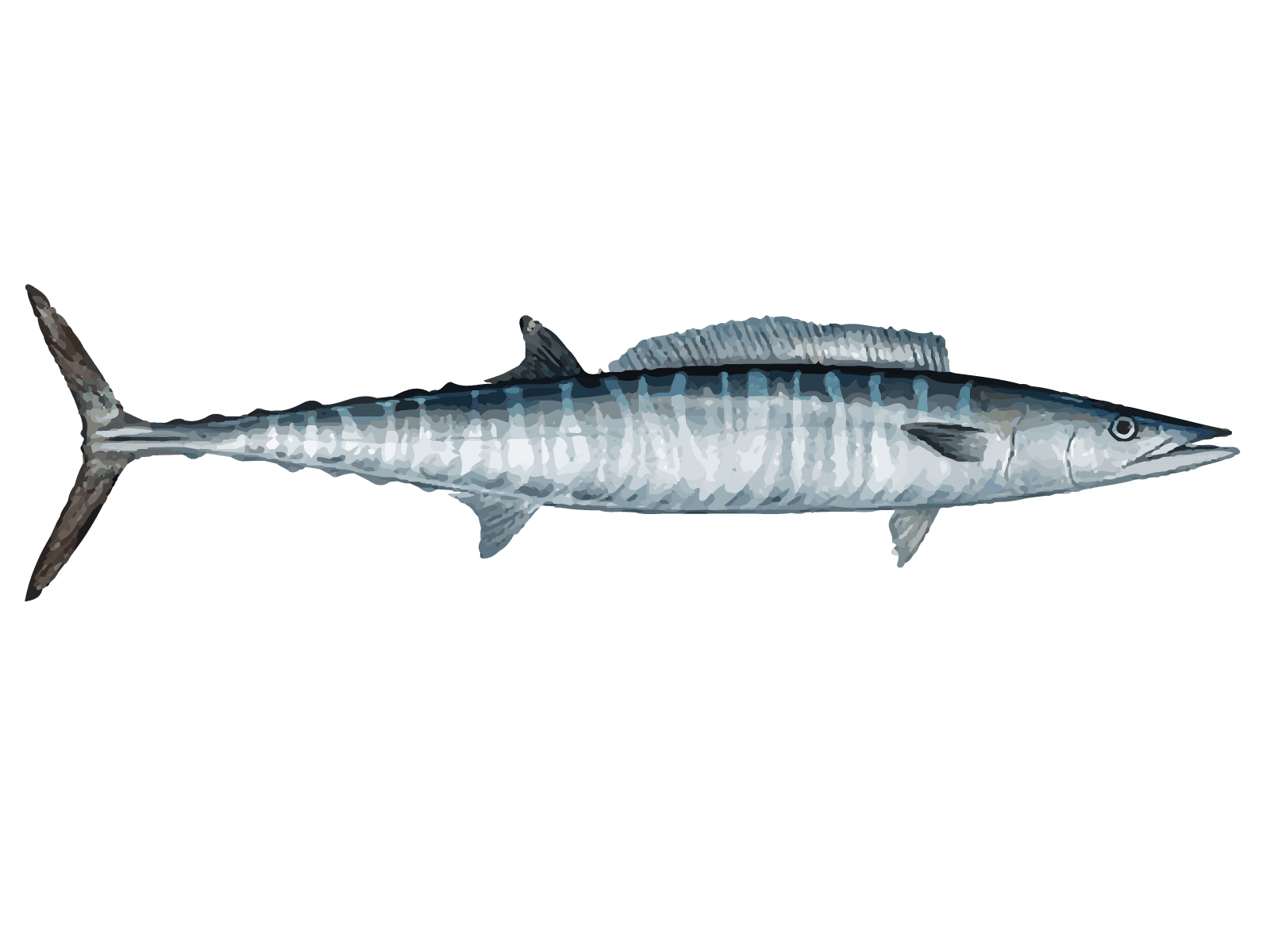
The Wahoo (Acanthocybium Solandri) is a sleek, torpedo-shaped game fish belonging to the family Scombridae and order Perciformes. Known locally in Hawaii as Ono—a Hawaiian word meaning "delicious" or "good to eat"—this fish is one of the ocean's most prized catches for sport anglers and seafood enthusiasts alike. With its distinctive shimmering blue-green back, silvery flanks adorned with zebra-like striping, and a beak-like snout lined with razor-sharp serrated teeth, the Wahoo is instantly recognizable. What truly sets this species apart is its incredible speed; it can cruise at an average of 48 mph and burst up to 60 mph, making it a thrilling opponent for any angler willing to take on the challenge in tropical and subtropical waters worldwide.
The Wahoo's colorful exterior and aggressive hunting behavior make it a favorite among sport fishermen from Florida to the Bahamas and beyond. Its high-speed pursuits and dramatic strikes create unforgettable fishing moments that keep enthusiasts returning to the water season after season.
Wahoo Fish Habitat and Distribution
The Wahoo thrives in all tropical and subtropical waters across the Atlantic, Indian, and Pacific Oceans. This pelagic open-ocean species has a widespread native range but shows fascinating migration patterns depending on seasonal water temperatures. In the North Atlantic, it becomes abundant during summer months from North Carolina and Bermuda southward, with year-round populations established in Florida and the Gulf of Mexico.
In the northern Gulf of Mexico near Port Aransas, Texas, Wahoo populations congregate around oil and gas platforms during cooler months, offering anglers excellent nearshore opportunities. The species is commonly found in waters up to 66 feet deep but frequently ventures into deeper offshore territories. While generally solitary hunters, they occasionally form small groups of 2–3 individuals and congregate in larger schools during breeding season. The Bahamas represents one of the premier destinations for Wahoo fishing, particularly between March and November when migration numbers peak. Hawaii also provides exceptional offshore and nearshore reef habitat where these fish thrive year-round but are most abundant from May through October.
Wahoo Fish Size and Weight
Wahoo fish are fast-growing predators that typically range from 3 to 5 feet in length, though documented specimens have reached impressive proportions. The minimum recorded size for sport fishing is around 8 inches, while exceptional individuals exceed 8 feet in total length. Most commercial and recreational catches fall between 15 and 50 pounds, providing an exciting balance of manageable tackle and thrilling action.
The International Game Fish Association (IGFA) All-Tackle world record stands at an astounding 184 pounds, caught in Mexico in 2005. This exceptional specimen demonstrates the species' potential to reach truly trophy proportions. The maximum documented length is approximately 100 inches, making large Wahoo a legitimate bucket-list catch for serious anglers pursuing heavyweight game fish.
Wahoo Fish Diet and Behavior
As apex pelagic predators, Wahoo possess remarkably diverse and aggressive feeding habits. Their diet consists of squid, various tuna species, little tunny, porcupine fish, flying fish, dolphinfish, jacks, herring, pilchards, scad, frigate mackerel, butterfish, lantern fish, and numerous other pelagic prey species. This dietary flexibility reflects their status as successful hunters perfectly adapted to open-ocean conditions.
Wahoo are ambush predators that use their incredible speed to chase down prey with explosive acceleration. Their streamlined, spindle-shaped bodies and exceptional endurance make them nearly unstoppable once they commit to a strike. Unlike many fish species, Wahoo cannot regulate their body temperature and must constantly move to maintain optimal metabolic function. This perpetual motion, combined with their aggressive feeding drive, makes them exciting targets for anglers. They are solitary or form small hunting groups but only face predation from the ocean's largest apex predators—sharks and billfish—due to their speed and size. Upon capture or death, their vibrant colors fade remarkably quickly, a phenomenon that fascinates anglers and marine enthusiasts alike.
Wahoo Fish Spawning and Seasonal Activity
Wahoo reproduce through broadcast spawning, a reproductive strategy where females simultaneously release millions of eggs while males discharge sperm into the water column. This synchronized spawning approach dramatically increases fertilization success rates while reducing predation on vulnerable eggs. Females can produce several million eggs annually, and this extraordinary reproductive capacity combined with their accelerated growth rate has safeguarded the species from overfishing pressures.
The Wahoo maintains a year-round spawning season primarily concentrated in Florida and Caribbean waters, with peak activity occurring during warmer months. Adults reproduce multiple times throughout the year, ensuring consistent population replenishment. In Florida, Wahoo abundance peaks from July through November, making these months ideal for targeting this species in Atlantic and Gulf Coast waters. The Bahamas experience peak migration and spawning activity between March and November, while Hawaiian waters see peak fishing from May through October, correlating with warmer water temperatures and optimal feeding conditions.
Wahoo Fish Techniques for Observation and Capture
High-Speed Trolling Method: High-speed trolling at 12–15 knots using a 4–6 lure spread is the most effective technique for targeting Wahoo. Anglers should employ a fast trolling rig featuring a 30–50 wide reel spooled with wire leaders, since Wahoo teeth easily slice through monofilament or fluorocarbon lines. A double braided line attached to an 80–100 pound fluorocarbon leader approximately two feet long provides optimal strength and abrasion resistance. Minnow lures, bulletheads, and plungers are proven favorites that trigger aggressive strikes. In the Gulf of Mexico near Port Aransas, Texas, focusing your high-speed trolling around offshore platforms during fall and winter months yields consistent results.
Slow Trolling and Fresh Bait Technique: For anglers preferring a slower presentation, trolling at 8–10 knots with fresh ballyhoo baited on double J-hooks combined with rubber-skirted resin head lures or diving-lipped plugs proves highly effective. This method works particularly well in nearshore reef environments where Wahoo congregate. The slower speed allows the bait to present more naturally while still maintaining the action that triggers strikes from curious predators.
Jigging and Chunking Methods: Using vertical jigs beneath floating debris or employing a chunking strategy—cutting and dispersing bait chunks to create a scent trail—effectively attracts Wahoo to your location. These techniques work especially well around reef structures and nearshore platforms where fish naturally congregate. Around Florida's offshore reefs and the Bahamas' blue water zones, jigging produces explosive topwater strikes that create unforgettable fishing moments.
Wahoo Fish Culinary and Nutritional Value
Wahoo is genuinely excellent eating and commands premium prices at seafood markets worldwide. The flesh is firm and white with a mild, slightly sweet flavor often compared to tuna, swordfish, and mahi-mahi. Its delicate flaky texture appeals to discerning palates, and the low oil content makes it ideal for those preferring leaner seafood options. Wahoo fish tacos have become legendary throughout coastal communities, showcasing the versatility of this premium game fish in culinary applications.
Nutritionally, Wahoo is an outstanding protein source, extremely lean, low in saturated fat and sodium, and rich in omega-3 fatty acids, niacin, vitamin B6, and vitamin B12. These nutrients support heart health, brain function, and overall wellness. When prepared properly—whether grilled, baked, pan-seared, or incorporated into traditional dishes—Wahoo delivers an exceptional dining experience that satisfies even the most demanding seafood enthusiasts. The species' combination of sport value, culinary excellence, and sustainability through natural high reproductive rates makes it a responsible choice for both fishing and consumption.
Wahoo Fish Frequently Asked Questions
Q: What is the best bait and tackle setup for catching Wahoo fish?
A: Wire leaders are essential since Wahoo teeth cut through monofilament and fluorocarbon easily. Use a 30–50 wide reel with 80–100 pound leaders approximately two feet long. Fresh ballyhoo, minnow lures, bulletheads, and plungers all trigger aggressive strikes. High-speed trolling at 12–15 knots with multiple lures dramatically increases your chances of connecting with these speed demons.
Q: Where can I find Wahoo fish near Florida or the Bahamas?
A: Florida offers excellent year-round opportunities, with peak abundance from July through November. The Bahamas represents perhaps the premier destination worldwide, particularly between March and November during peak migration periods. Look for nearshore reef structures, offshore platforms, and deep blue water environments. Around Port Aransas in the Gulf of Mexico, fall months produce exceptional catches near offshore oil and gas platforms.
Q: Is Wahoo fish good to eat, and what nutritional benefits does it provide?
A: Absolutely—Wahoo is premium seafood with firm, white, mild-flavored flesh often compared to tuna and swordfish. It's an extra-lean protein source low in saturated fat and sodium while being rich in omega-3 fatty acids, vitamin B12, niacin, and vitamin B6. Wahoo fish tacos and grilled preparations are particularly popular preparations that showcase its delicate flavor.
Q: When is the best time to fish for Wahoo throughout the year?
A: Timing varies by location. In Florida, target July through November for peak abundance. The Bahamas experience excellent fishing March through November. Hawaii offers year-round opportunities with peak activity from May through October. Gulf of Mexico locations like Port Aransas are best during cooler fall and winter months. Always check local seasonal reports for current conditions and migration patterns.
Q: How fast can Wahoo swim, and what makes them such exciting game fish?
A: Wahoo average speeds of 48 mph with documented bursts exceeding 60 mph, making them among the ocean's fastest fish. Their spindle-shaped bodies, aggressive predatory behavior, explosive strikes, and incredible endurance create heart-pounding fishing experiences. These speed and power characteristics make them prized by sport anglers seeking thrilling confrontations with true oceanic athletes.
Q: What distinguishes Wahoo from similar species like mackerel or barracuda?
A: Wahoo possess a distinctive fold of skin covering their jaw when the mouth closes, differentiating them from Spanish and Atlantic mackerel. Compared to barracuda, Wahoo display more pronounced zebra-like striping, a more elongated body profile, and superior speed. Their shimmering blue-green coloration and serrated teeth are also distinctive identifying features. Upon death, Wahoo colors fade remarkably quickly—a unique characteristic that fascinates fishermen.